
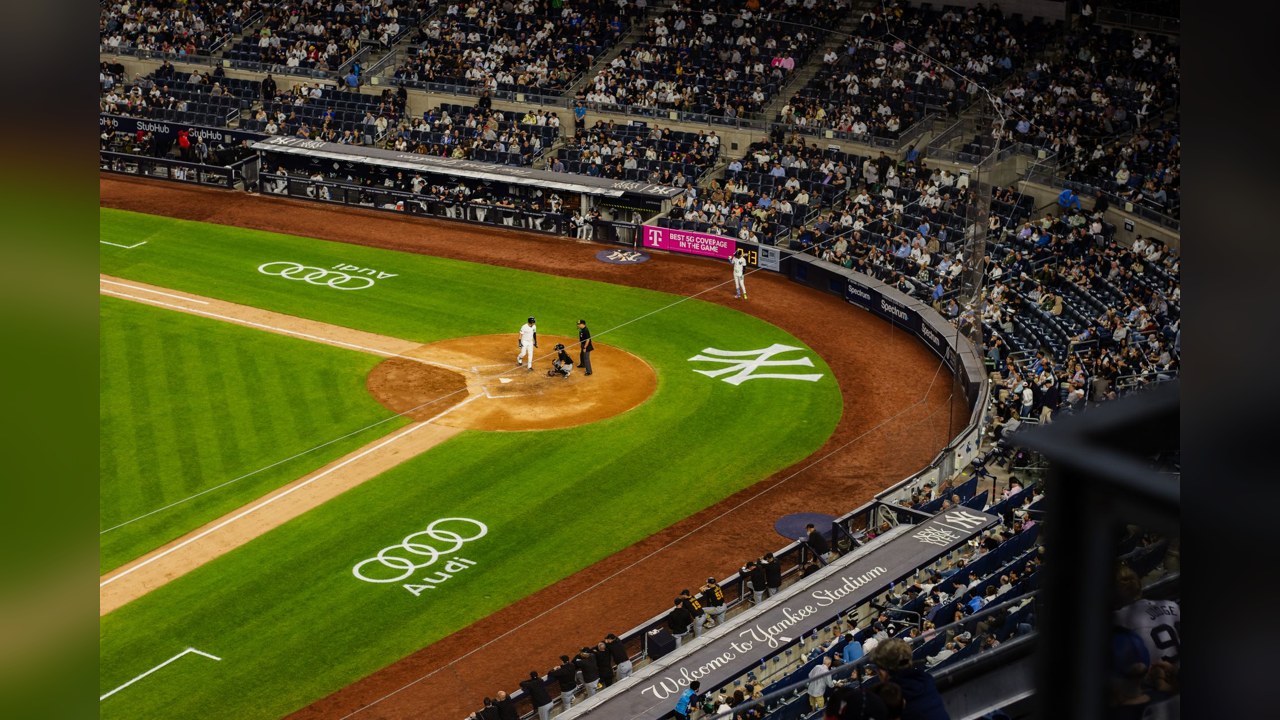
Twenty-one fastballs at 100 mph or harder. Career-high 101.8 on the gun. An average heater of 100.1 — also a personal best as a starter. And the only run that crossed on his watch came because of a misplay in the outfield and a ball that got away from his catcher.
That’s the line Roki Sasaki posted Friday night at Yankee Stadium, and the Dodgers walked out of the Bronx with a 2-1 win over the Yankees to open a marquee three-game series. Five strikeouts, one walk, 5⅔ innings, one unearned run. The 21 triple-digit fastballs were the most by any Dodger since pitch tracking began in 2008.
For a 24-year-old who spent the first half of the season searching — battling injuries, inconsistent command, and velocity that dipped below the standard that made him one of the most coveted arms on the planet — Friday looked like the arrival everyone in Los Angeles had been waiting on.
Sasaki attacked. He didn’t nibble. He trusted his fastball and his splitter, and the velocity came without him chasing it. He told reporters through interpreter Kensuke Okubo that he reworked his lower-body mechanics during the All-Star break and felt the difference immediately. He didn’t even realize how hard he was throwing.
“The velocity was actually there,” Sasaki said. “I think that’s a good thing.”
The lone Yankees run scored after Andy Pages misplayed a ball in the outfield, allowing Jasson Domínguez to reach third, and Dalton Rushing was charged with a passed ball. Outside of that defensive hiccup, Sasaki controlled the game.
Dodgers manager Dave Roberts has seen this script before. Two years ago, Yoshinobu Yamamoto walked into the same stadium still finding his footing and delivered a start that Roberts has pointed to as the turning point of his rookie season. Yamamoto is now a frontline starter. After watching Sasaki overpower the Yankees, Roberts drew the parallel.
“It sort of reminded me of when Yamamoto was here a couple years ago,” Roberts said. “That performance was a turning point for him.”
Pressed on whether this could be Sasaki’s version of that night, Roberts kept it simple: “I hope so. He wanted to get off on the right foot in the second half and he did just that.”
Roberts noted the difference between pitching at 97 or 98 and sitting at 101. “That’s a big difference,” he said. “It gives you a lot more margin.” He also praised the splitter, which generated swing-and-miss throughout the night after the work Sasaki put in during the break.
Catcher Dalton Rushing, who has watched Sasaki evolve from behind the plate, saw something beyond the radar gun. Sasaki was showing emotion — pumping his fist after strikeouts, feeding off the moment in the second and third innings. That hadn’t been part of his makeup for most of the season.
“He was a different animal out there tonight,” Rushing said. “Everything in this game comes with confidence.”
Sasaki admitted afterward that pitching at Yankee Stadium against one of baseball’s iconic franchises felt special, and that he wanted to make the most of it. He believes the mechanical adjustments are repeatable, even while acknowledging that baseball doesn’t guarantee anything.
One start doesn’t make a career, and the Dodgers know it. But 21 fastballs at 100-plus in a single game — more than any Dodger has thrown in 17 years of tracked data — is the kind of thing that makes you pull up the tape and watch it twice. The film doesn’t lie.