
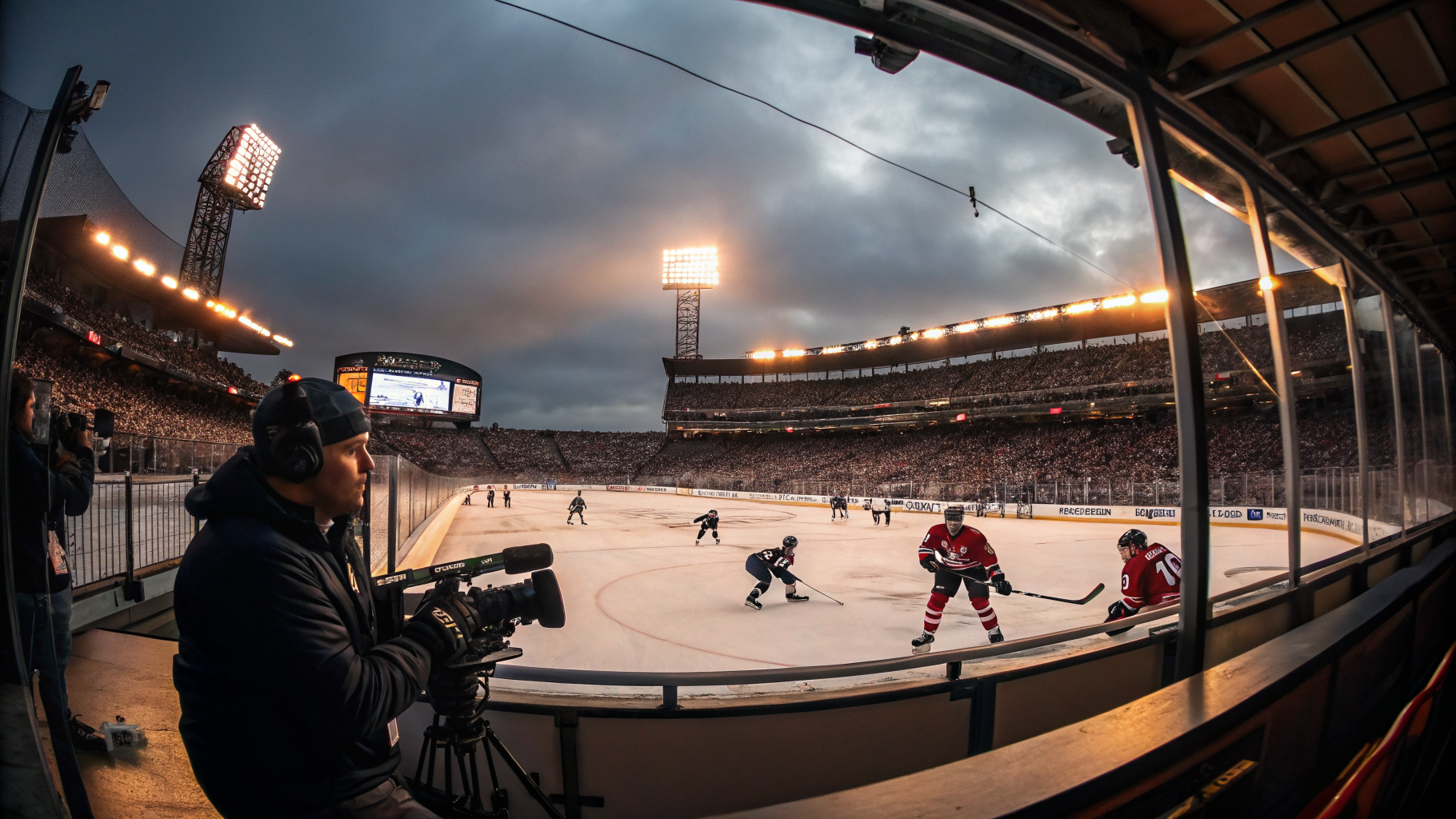
David La Vaque, the Star Tribune reporter who for more than 15 years was the most read chronicler of Minnesota high school hockey, died Saturday after a battle with leukodystrophy. He was 50.
His daughter, Michaela, announced his death on a GoFundMe page. “We ask that you keep David in your prayers, and we know that he is no longer suffering and in a beautiful place now,” she wrote. “We miss him and love him for a lifetime.”
La Vaque had been the Minneapolis newspaper’s primary beat reporter for the state’s most high-profile prep sport since 2009. In 2020, he and Loren Nelson co-authored “Tourney Time,” a book documenting the first 75-plus years of the Minnesota boys state hockey tournament. La Vaque called it “a big love letter to the state tournament.”
He was a 1994 graduate of St. Paul Johnson and studied journalism at the University of Minnesota, where he covered the Gophers men’s hockey beat for the student newspaper, the Minnesota Daily. John Millea, who retired from the Minnesota State High School League last year and worked alongside La Vaque both at the Daily and later at the Star Tribune, remembered a quiet young reporter who grew into a fixture.
“He was kind of watching me and (Pioneer Press’) Gregg Wong, the beat writers,” Millea said. “You could see him grow and become more confident. It wasn’t long until he was just one of the media crew.”
Millea described La Vaque as universally liked, possessed of a wacky sense of humor that included reciting lines from The Simpsons. But the warmth didn’t soften the reporting. La Vaque treated the high school beat with a seriousness that some in the prep sports world weren’t used to — asking tough questions, pushing for stories that other reporters on the beat wouldn’t chase.
“He would push, he would definitely push, but he never went over the line,” Millea said. “He ruffled some feathers. … Because Dave did things that other people covering high school sports didn’t, because he wanted to get that story, he wanted to tell the story, and he was very, very good at it.”
Fellow Star Tribune prep sports reporter Jim Paulsen called himself and La Vaque “two city kids proud to represent their hometowns.” Paulsen pointed to La Vaque’s instinct for language and his ability to build trust with coaches.
“David always had a great grasp of clever phrases and euphemisms,” Paulsen said. “He had a way of connecting with high school coaches in ways that would develop trust and lasting bonds. He was never looking to take the next step forward. He cared deeply about high school sports, and it showed.”
La Vaque’s profile extended beyond Minnesota. He was featured in an ESPN “E:60” segment on the cultural phenomenon of hockey hair at the state tournament — the kind of story that only someone embedded deep enough in the sport could tell with both affection and credibility.
The illness arrived fast. It was initially feared La Vaque had suffered a stroke shortly after the 2025 boys hockey tournament. The true diagnosis was leukodystrophy, a degenerative disorder that damages the brain and spinal cord. He eventually lost his ability to walk and talk.
He returned to the state tournament in 2026 anyway, wearing a Northern Lakes jersey as the Class A team’s honorary captain for its state quarterfinal.

“Nobody covered that sport like he did, and you could tell he loved it,” Millea said. “The coaches, everybody involved loved David.”
Millea noted that even hockey couldn’t match what La Vaque felt for his daughter. “He would light up every time you asked him about his daughter — every time,” he said. “That was the real joy in his life, you could tell, was Michaela.”
Details regarding a celebration of life are forthcoming, according to Michaela’s post.
Sources: