
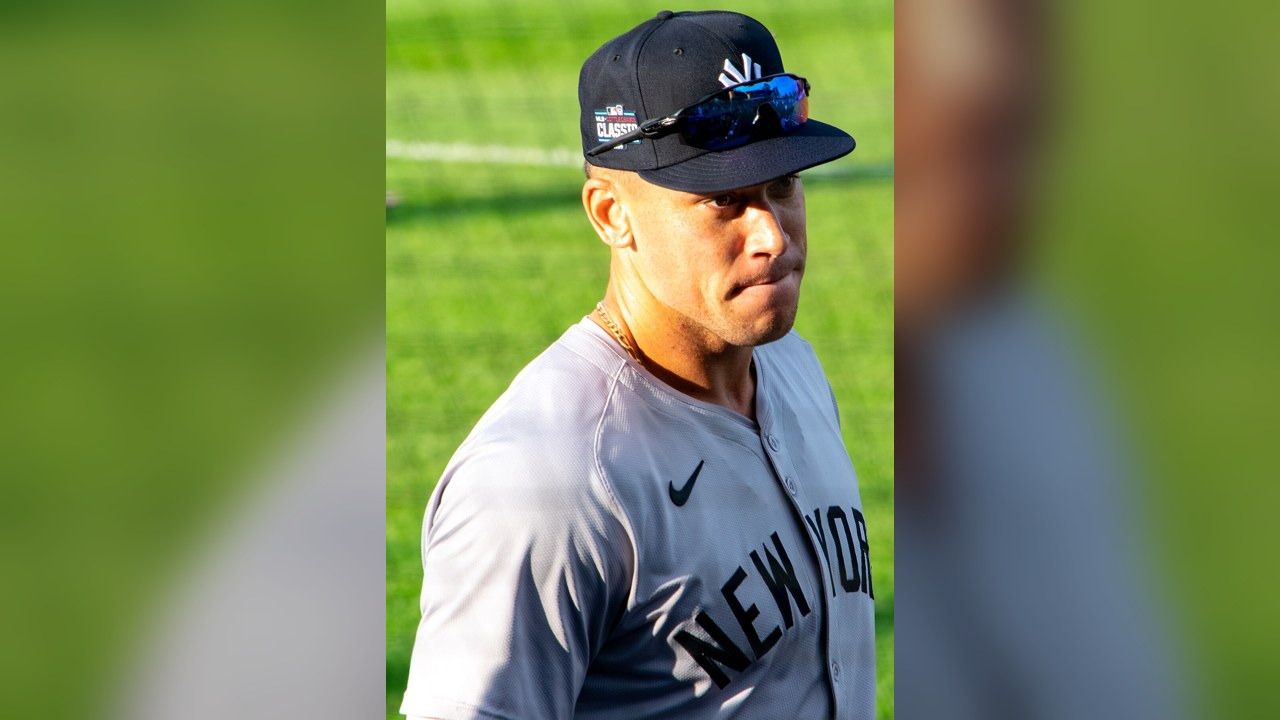
Aaron Judge stood in front of reporters at Yankee Stadium on Friday and delivered the kind of update that qualifies as progress only if you grade on a steep curve. A scan taken during the All-Star break showed “some healing” in the stress fracture in his right ribs. Not enough. Not yet.
“There’s been some progress, some healing going on, but not fully healed,” Judge said, via MLB.com. “So we’re still waiting on one more doctor to take a look at it, kind of see how we progress forward the next couple weeks. But definitely a positive sign that we’re seeing some healing.”
Judge has not been cleared to resume baseball activities. He hasn’t played since May 31. The initial timetable was four to six weeks before re-evaluation, and that window has now closed without a green light. One more doctor needs to review the imaging before any next step is mapped out.
When asked whether he expects to play again this season, Judge was direct: “I don’t see why I wouldn’t.”
Manager Aaron Boone was similarly bullish, though his phrasing left the meaningful part — the date — untouched. “I feel good about the fact that he will be back,” Boone said before Friday’s series opener against the Dodgers. “It’s just a matter of when.”
The when is the entire problem. Stress fractures in the rib cage do not operate on rehab protocols you can accelerate with effort or grit. Bone heals at the rate bone heals, and partial healing at the six-week mark means the Yankees are operating without their best player for an open-ended stretch of a season that started with legitimate World Series aspirations.
The team’s record tells the story in blunt terms. New York was 36-23 when Judge last played. Since then: 18-19. That is a .486 winning percentage, which over a full season projects to roughly 79 wins — not a playoff pace in the American League. The Yankees also weathered a brutal 14-of-18 slump before closing the first half with a four-game winning streak, a run that papered over the underlying issue but didn’t resolve it.
Judge’s own numbers before the injury were a mixed bag. He was hitting .248 with 17 home runs and 38 RBIs — productive but not at the level that earned him AL MVP in each of the last three full seasons. He had just one home run in his final 18 games, a stretch that suggests the rib may have been compromised before anyone identified the fracture. A .248 average from a player who hit .324 in 2024 and .322 in 2025 is a 76-point drop, and while small-sample caution applies, the power outage in his last three weeks aligns uncomfortably with the eventual diagnosis.
The injury picture around Judge is equally grim. Giancarlo Stanton hasn’t played since April 24 due to a strained right calf. Max Fried, sidelined with a left elbow bone bruise, was scheduled to make a rehab start Friday. Carlos Rodón is out with left elbow inflammation. Clarke Schmidt, working back from Tommy John surgery, was set to throw an inning of batting practice Saturday.
That is four significant contributors missing alongside Judge, and it frames the Yankees’ 18-19 record without him less as a collapse and more as an organizational stress test. The lineup Boone ran out for the Dodgers series bore only a passing resemblance to the one that opened the season.
Judge, 34, said the partial healing is “definitely a positive sign.” It is. But positive signs and cleared protocols are different things, and the Yankees are now more than six weeks into a recovery that was supposed to take four to six. The next scan, the next doctor’s opinion, and the next few weeks of bone remodeling will determine whether Boone’s confidence is warranted or whether “a matter of when” quietly becomes a matter of if.
Sources:
- Yahoo Sports (AP) — Aaron Judge’s rib not fully healed
- CBS Sports — Aaron Judge injury update and timeline
- Yahoo Sports (AP) — Aaron Judge’s rib not fully healed