
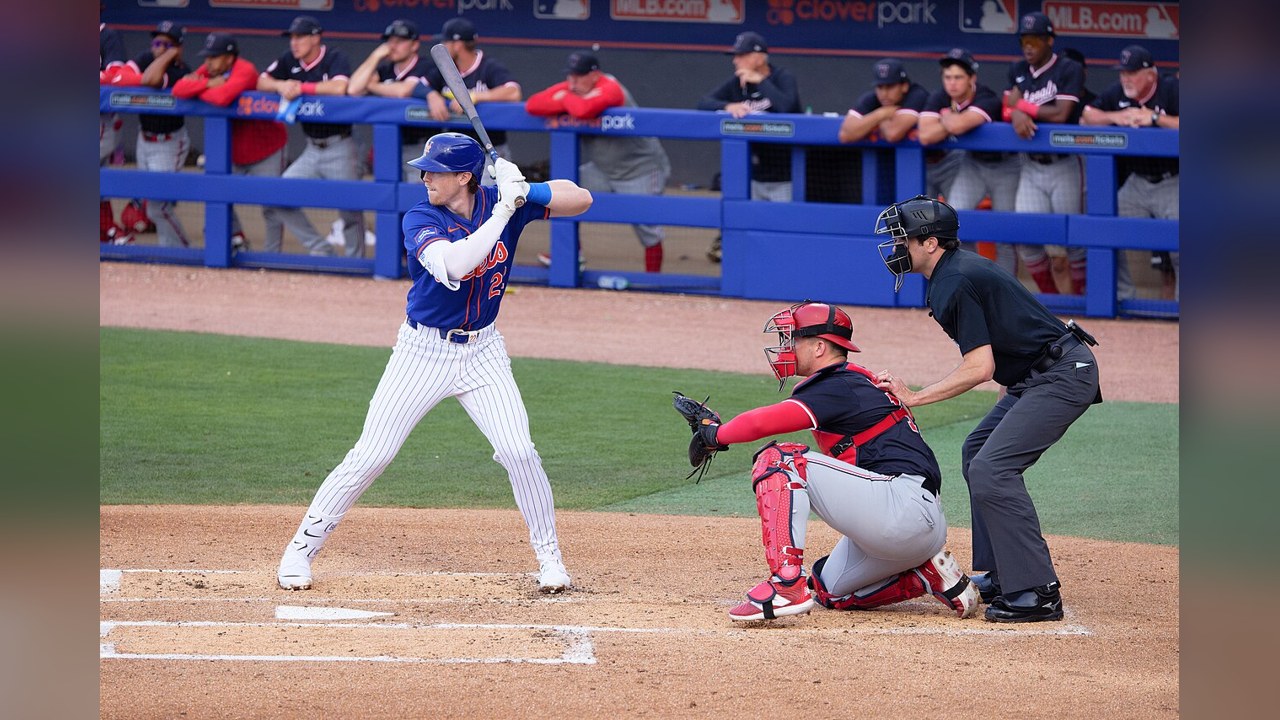
The Mets are 42-58, ten games out of a playoff spot, and president of baseball operations David Stearns has already started fielding offers. The August 3 trade deadline is bearing down, and New York is open for business — including, reportedly, dealing from a collection of young infielders that features Brett Baty, Mark Vientos, Ronny Mauricio, and Luisangel Acuña.
That last name has fans circling. Baty, 26, is the kind of player who makes a front office reach for the antacids: flashes of real ability buried under a season’s worth of underperformance. His 2026 line reads .224/.298/.324 with five home runs and 32 RBIs across 95 games, good for 0.1 bWAR. A year ago, he posted 3.0 bWAR with a .254/.313/.435 slash and 18 homers in 130 games. The gap between those two seasons is the entire argument.
What Baty offers that a lot of deadline fodder doesn’t is positional flexibility. He has logged innings at third base, second base, first base, right field, and even shortstop this season. Baseball Reference credits him with positive defensive value at third (2 DRS in 2026) and a perfect 1.000 fielding percentage across 20 games in the outfield. A contender looking for a left-handed bench bat who can spell three or four positions could do worse — and probably will.
The Mets’ motivation to move him is straightforward. They are sellers. The Luis Robert Jr. trade — Acuña and minor league pitcher Truman Pauley to the White Sox for an outfielder who hit .224 before a lumbar disc herniation shelved him in April — is the kind of deal that accelerates a front office’s appetite for course correction. Stearns has used 30 different relief pitchers this season. The bullpen has a 5.30 ERA over the past month. The roster is a revolving door, and young infielders with club control are the currency that buys arms.

Whether Baty alone brings back anything meaningful is the question nobody can answer yet. He has multiple years of cheap control, which matters to a retooling club. He has shown he can produce for a month or two at a time, which matters to a contender patching a hole. He also has a career .656 OPS and negative offensive runs above average over five major-league seasons, which matters to everybody.
The trade market is already moving. The Dodgers acquired right-hander Seth Halvorsen from the Rockies on Tuesday, betting on a 99.6 mph fastball and development chops that have turned scrap-heap arms into leverage pieces. The Royals signed lefty Aaron Bummer to a minor-league deal after Atlanta ate the remainder of his $9.5 million salary. Contenders are shopping in every aisle — the discount rack included.
Baty fits that rack. A buyer who sees the 2025 version — the one who hit 18 homers and played passable defense at two infield spots — might send a mid-tier prospect and take the chance. A buyer who sees the 2026 version, the one with a .622 OPS and a -1.0 WAA, will pass. The Mets are betting somebody sees the first guy.
They probably will. Every deadline, some club trades for a player the rest of the league has already decided on, and half the time it works. The other half, you get Luis Robert Jr.