
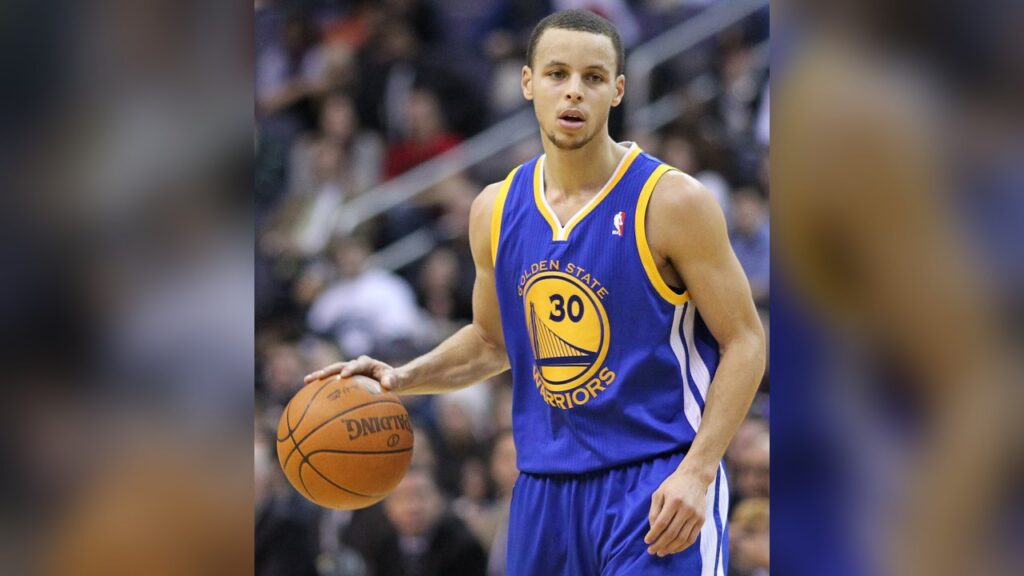
Somebody posed a question that’s been sitting in the back of every old head’s mind since about 2015: What if Stephen Curry never changed basketball? What if those ankles — the ones that betrayed him in 2011-12, limiting him to 26 games and making him look like a career insurance claim — never got right? What if Steve Kerr doesn’t walk through the door in 2014 and hand Curry the keys to the offense?
It’s a hypothetical. But the numbers tell you how thin the ice was.
Curry’s third season, 2011-12, is the fork in the road. He played 26 games. Averaged 28.2 minutes. His right ankle underwent surgery that summer and then required a second procedure the following April. The Golden State Warriors had just drafted him seventh overall two years earlier, and there were legitimate questions about whether his body could handle an 82-game grind. He was a slight, 185-pound guard with a jumper that could cook you from the parking lot and a lower body held together with surgical tape and prayer.
He came back. He played 78 games in 2012-13, averaged 22.9 points, and knocked down 272 threes. Then Kerr arrived in 2014-15, ripped up Mark Jackson’s playbook, and built an entire system around Curry’s range — screens, movement, green lights from 30 feet. Curry won his first MVP. The Warriors won 67 games and a title. The next year he became the first unanimous MVP in NBA history, averaging 30.1 points on a 50-40-90 shooting split, and broke his own single-season record with 402 three-pointers. Forty-two percent of his field-goal attempts came from beyond the arc that season, per Basketball Reference. The league watched and copied.
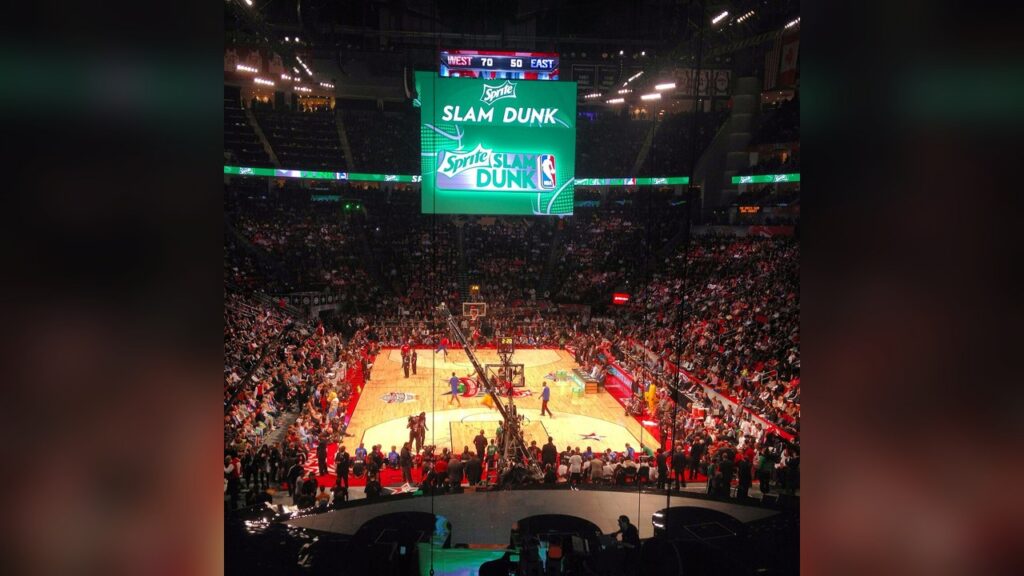
Here’s what changed: before Curry’s unanimous MVP season, no team in the NBA averaged more than 30 three-point attempts per game. Within five years, most of the league was launching 35 or more. The midrange jumper — the bread and butter of every guard from Allen Iverson to DeMar DeRozan — became a statistical sin. Post players who couldn’t stretch the floor got squeezed to the bench. Defenses that packed the paint got stretched until they snapped. Wikipedia’s entry on Curry states plainly that he is “credited with revolutionizing the game by popularizing the three-point shot across all levels of basketball,” and that’s not marketing copy. That’s the record.
So the hypothetical answers itself. If Curry’s ankles don’t hold, if Kerr doesn’t unlock him, the three-point revolution still probably arrives — eventually. Analytics departments were already circling the math. Daryl Morey was preaching efficiency in Houston. Ray Allen and Reggie Miller had already proven the three was a weapon, not a gimmick. But “eventually” is doing a lot of work in that sentence. Without Curry as the proof of concept — a slight guard winning titles by launching from the logo — the shift arrives slower, maybe a generation slower. Big men clog the paint a few more years. The midrange survives. Maybe nobody shoots 402 threes in a season until 2025.
Curry is now 37, in his 17th season, still averaging 26.6 points and launching 11.3 threes per game. He passed Ray Allen as the all-time leader in three-pointers made in 2021. He has the highest career free-throw percentage in NBA history at .912. Four rings, two MVPs, a Finals MVP, and a 268-game streak with at least one made three that ran from 2018 to 2023.
The ankle held. The rest is everybody else’s problem.