
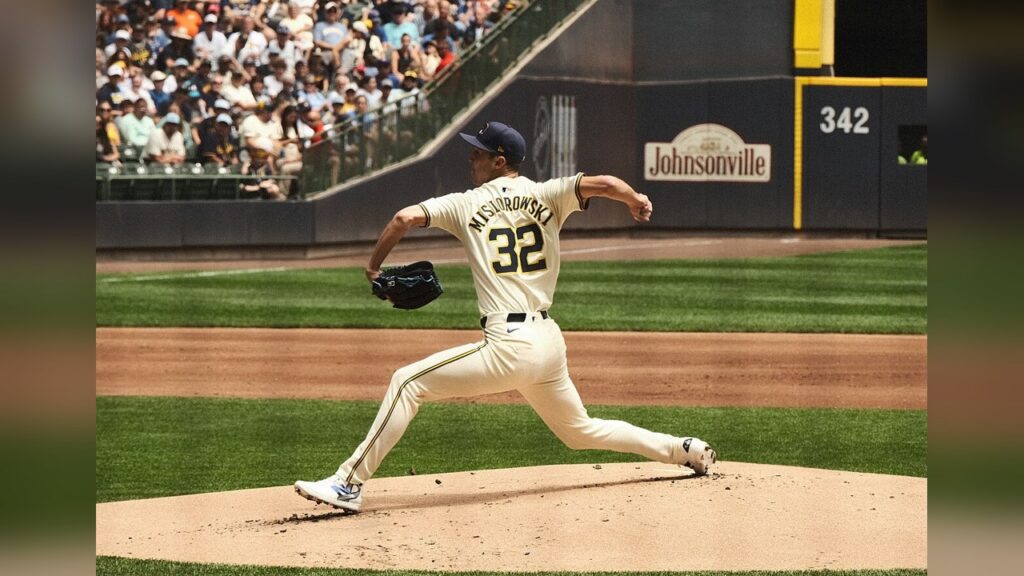
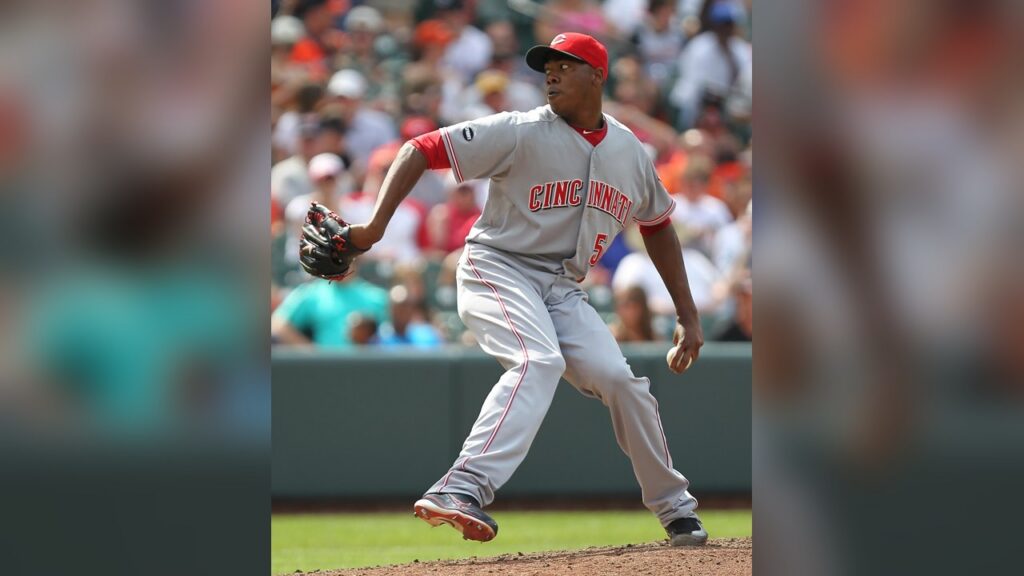
Aroldis Chapman spent fifteen years building the most terrifying fastball résumé in baseball history. Jacob Misiorowski needed thirteen months to top it.
On July 26, Milwaukee’s 24-year-old right-hander surpassed Chapman for the most career pitches with a perceived velocity of at least 103 mph in the pitch-tracking era, which dates to 2008. Chapman’s total stood at 675. Oakland reliever Mason Miller ranks third, at 257 — less than 40% of Chapman’s count. Misiorowski, who made his major-league debut in June 2025, blew past both of them in roughly 33 career starts.
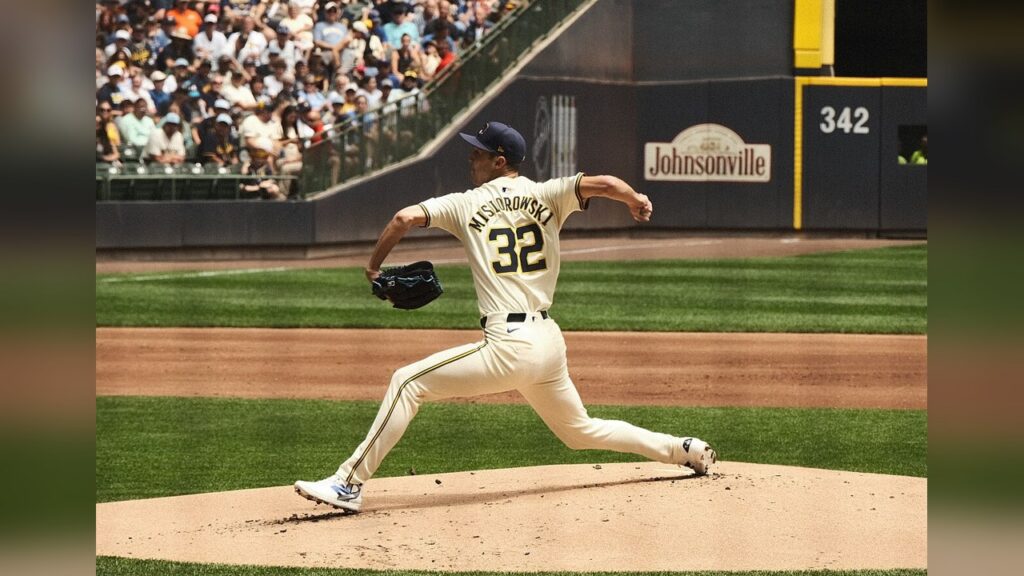
Perceived velocity adjusts a pitch’s actual radar-gun reading for the pitcher’s extension — how close to home plate he releases the ball. At 6-foot-7, Misiorowski generates elite extension, meaning his already-blazing fastball plays even hotter to the hitter’s eye. A 99 mph pitch from his release point can register as 103 mph perceived, because the batter has less time to react than the raw number implies.
That same day, Misiorowski set a separate record. He recorded seven strikeouts on pitches of 103.0+ mph through just three innings, the most in a single game under pitch tracking. The previous high was three — a mark Misiorowski himself had tied twice this season, and that Chapman once reached on August 10, 2016. Misiorowski also recorded six such strikeouts in a June 12 outing. Four of the five entries on the all-time leaderboard belong to him.
The numbers strain credulity even before the velocity records. Through 19 starts in 2026, Misiorowski owns a 1.57 ERA with 173 strikeouts in 115 innings — a 13.5 K/9 rate that ranks among the best in baseball. He has allowed just 61 hits all season. His 4.4 WAR already dwarfs the 0.5 he posted across 15 appearances as a rookie, when he still finished 11th in National League Rookie of the Year voting and made the All-Star team. He made the All-Star team again in 2026.
What makes the record structurally absurd is the role gap. Chapman compiled his 675 pitches as a late-inning reliever, entering for one inning at a time and emptying the tank on every fastball. Miller operates the same way. Misiorowski is doing this as a starting pitcher — pacing himself across six or seven innings, mixing in secondary pitches, and still generating triple-digit perceived velocity at a rate that dwarfs two of the hardest throwers the sport has ever measured.

Chapman’s record was a career achievement. Misiorowski broke it before his second full season was half over.
Sources: