
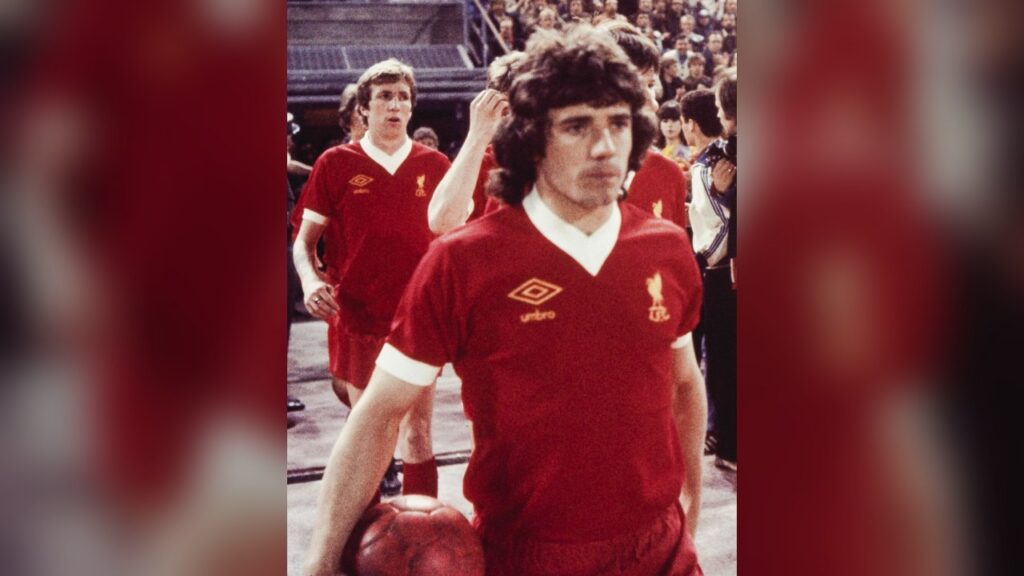
Kevin Keegan — two-time Ballon d’Or winner, European Cup champion, and the man who nearly dragged Newcastle United to a title nobody thought possible — has died at 75 after a battle with stage four cancer. His family confirmed the news Monday afternoon in a statement published through Sky Sports journalist Pete Graves.
“It is with immense sadness that we announce that Kevin Keegan has passed away at the age of 75,” the family’s statement read. “The former England player and manager had been battling cancer and was surrounded by his wife and daughters in his final moments. Kevin, a double Ballon d’Or winner, was a much-loved husband, father and grandfather.”
The family had revealed Keegan’s diagnosis in January. In June, he spoke publicly about the stage four cancer, telling reporters he wanted to attend one last match at St James’ Park to say goodbye. He got his wish.
Born in 1951 in Armthorpe, Doncaster — son of a miner, not a silver spoon in sight — Keegan started his career the way real ones do: at the bottom. Scunthorpe United, 1968, an apprentice on wages so thin he spent summers plate-laying on the local railway. Bill Shankly’s chief scout spotted him, and Liverpool paid £35,000. Three days into training at Melwood, Shankly told him he’d play for England. He made his debut against Wales the following year.
What followed at Liverpool was a feast. Three First Division titles, two UEFA Cups, one FA Cup, and a European Cup in his final season. In 230 appearances, 68 goals. He formed a strike partnership with John Toshack that defenders still talk about — the little-and-large combo that ran riot through the 1970s. Then he left for Hamburg in 1977 for a then-German record £500,000, won two Bundesliga titles, and collected the Ballon d’Or in back-to-back years, 1978 and 1979. He is the only Englishman to win the award twice.
He earned 63 caps for England, scored 21 goals, captained the side 31 times. His international career was starved of tournament football — England failed to qualify for the 1974 and 1978 World Cups — and his only World Cup appearance amounted to 26 minutes against Spain in 1982, his back held together by tape and willpower.
But it was at Newcastle where Keegan became something more than a footballer. He took over a club sliding toward the third tier in February 1992, kept them up, promoted them, and in 1995-96 had them 12 points clear at the top of the Premier League. They finished second. Four points behind Manchester United. The collapse — late defeats to Liverpool and Nottingham Forest, Ferguson working the margins like a chess grandmaster — produced the “I would love it” rant that became English football folklore. Raw, unfiltered, a man who cared so much it ate him alive on live television.
He managed England from February 1999 to October 2000, resigning five minutes after a 1-0 defeat to Germany in the last match at the old Wembley. A spell at Manchester City followed, including promotion as Division One champions in 2002. He returned to Newcastle in 2008, lasted eight months, and walked out over a rift with owner Mike Ashley that never healed.
Tributes arrived from every corner of the game. Alan Shearer, whom Keegan signed for Newcastle in 1996, posted: “My Hero. My manager. My friend. Sleep easy Boss.” Liverpool called him “our Mighty Mouse.” Newcastle’s statement called him “the beating heart of Newcastle United for generations of supporters.” Hamburg, Southampton, Manchester City, Manchester United, and the English Football League all issued statements. England will honor him before their Nations League match against Spain at Wembley in September.
Five foot seven in Cuban heels. Six foot six when the crowd sang his name. That was Kevin Keegan.

Sources: