
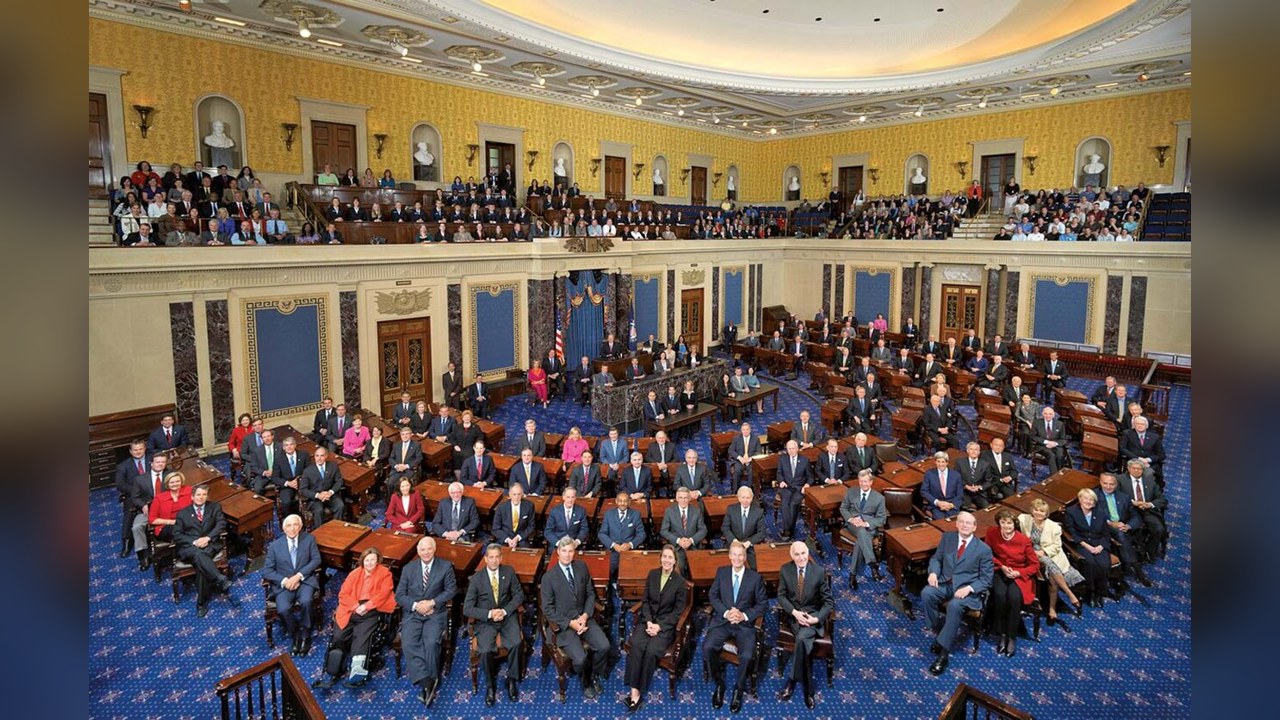
ARLINGTON, Va. — The Senate probably has the 60 votes needed to break a filibuster and pass the bipartisan Protect College Sports Act, Sen. Eric Schmitt (R-Mo.) said Friday. The catch: the two conferences that run the sport aren’t sold yet, and the clock is down to weeks.
Speaking at the Associated Press Sports Editors Summer Conference alongside NCAA President Charlie Baker, Schmitt said the next stretch before Congress leaves for its August recess is the best — and maybe only — window to move the legislation before attention shifts to government funding and the 2026 midterm elections.
“If there’s any action that’s really going to be meaningful to get this done, the best time to do it is the next couple weeks,” Schmitt said.
The Senate Commerce Committee advanced the bill this week. Negotiations have since zeroed in on objections from the SEC and Big Ten, which Yahoo Sports first reported Friday morning. The revisions under discussion include clarifying that proposed media-rights pooling would be voluntary, ensuring the bill would not restrict the conferences’ ability to add member schools, and resolving other technical issues. Schmitt called many of the concerns “definitional” and said lawmakers are working to build “a broader coalition.”
He said supporters “probably have 60 votes” — the threshold to overcome a filibuster — but that backing from the SEC and Big Ten would give the bill more momentum. “I don’t know that we need to, but I certainly would like to,” he said.
Baker, appearing on the same panel, acknowledged the conferences’ concerns but warned against scrapping a bill that addresses eligibility, transfers, and agent regulation. “People want to get it to yes,” Baker said. He called it a mistake to “kill in the crib” a bill that “did so many good things.” Schmitt noted the legislation has avoided the usual “red jersey/blue jersey” partisan divide in Washington — a rare enough occurrence in that building to deserve a medal.
Schmitt argued Congress is “the only entity on the planet” that can grant the antitrust protections the NCAA needs to enforce national rules on eligibility, transfers, and name, image, and likeness deals. Without legislation, he said, college sports could become “even further unrecognizable” within three years, with schools eventually forced to make hard decisions about Olympic and other non-revenue sports.
Baker put it more bluntly: “You can’t have national championships if you don’t have national rules. Period.”
Both men pointed to problems the bill is meant to address. Baker said roughly 40% of athletes who entered the transfer portal during his first year never landed at another NCAA school, blaming much of that on bad advice from unregulated agents. Schmitt said the current system has produced chaos, with tampering and recruiting happening before seasons are over.
Baker also flagged athlete harassment from sports betting as the No. 1 issue raised by student-athletes in meetings before he took office in March 2023. The NCAA has since pushed states to ban proposition bets on college athletes and partnered with Venmo to stop users from sending payment requests to players after games. Moderator Ross Dellenger of Yahoo Sports recalled Penn State quarterback Drew Allar saying he received hundreds of Venmo requests from angry bettors after throwing a game-sealing interception in last season’s College Football Playoff semifinal.
“This is a much bigger problem than I think people realize,” Baker said.
Friday’s session was originally scheduled to include Sen. Maria Cantwell (D-Wash.) and Rep. Lori Trahan (D-Mass.) alongside Schmitt. Dellenger noted that some senators could not attend because negotiations over the legislation were still underway in Washington.