
The NFL’s annual playoff churn has become one of the league’s most reliable statistical phenomena. Since the current 14-team format took hold in 2020, an average of roughly six new teams crack the field each January, displacing half the previous year’s entrants. USA TODAY Sports published its ranking of every 2025 non-playoff team by likelihood of crashing the 2026 postseason, and the top of the list leans on a familiar analytics-friendly premise: roster talent and divisional weakness matter more than recent vibes.
Baltimore sits first. The Ravens fired John Harbaugh — a move that reads as aggressive given his career .620 win percentage and a Super Bowl ring — and handed the job to Jesse Minter, the former Chargers defensive coordinator who oversaw a dramatic turnaround in Los Angeles. The logic is that Baltimore’s 2025 collapse was less about talent scarcity than self-inflicted errors: missed tackles, communication breakdowns, late-game meltdowns. Minter’s reputation for precision and defensive communication directly targets those failure modes. First-time play-caller Declan Doyle inherits an offense that slid to the middle of the pack despite a two-time MVP at quarterback in Lamar Jackson. The AFC North projects as a toss-up, which is doing a lot of work in this ranking — a coin-flip division for a roster this expensive is a reasonable bet.
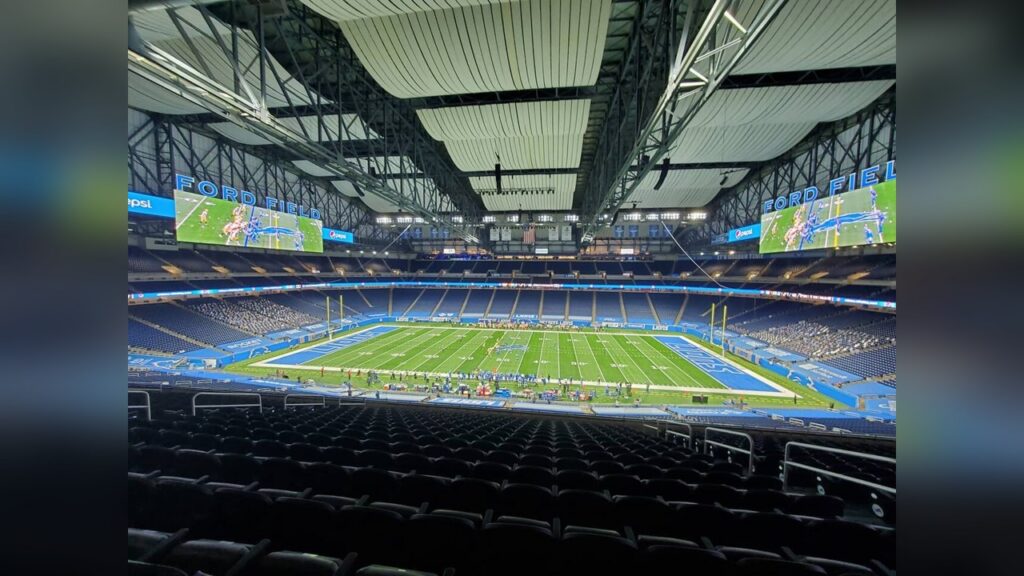
Detroit lands second, and the case is almost entirely about regression to the mean. The Lions won 27 regular-season games across 2023 and 2024 before cratering to a fourth-place finish in 2025. New coordinator Drew Petzing takes over an offense that still generated chunk plays even amid the downturn. The NFC North’s depth — with Minnesota, Green Bay, and Chicago all fielding competitive rosters — is the only thing keeping Detroit from the top spot. That’s the right call. Divisional strength is a real constraint on playoff probability, and the NFC North is a meat grinder in a way the AFC North is not.
Tampa Bay at third is where the ranking gets interesting — and where the methodology earns its keep. The Buccaneers’ five-year playoff run snapped in 2025, Mike Evans is gone, and Todd Bowles’ margin for error has thinned. But the NFC South remains the league’s weakest division by almost any efficiency metric, and the exercise explicitly measures playoff access, not postseason advancement. Baker Mayfield and Emeka Egbuka carrying an Evans-less offense is a real question. Rueben Bain Jr., the first-round edge rusher, needs to contribute immediately. But the path of least resistance runs through Atlanta, Carolina, and New Orleans, and that matters more than roster ceiling.
Cincinnati ranks fourth on the strength of an uncharacteristically aggressive offseason. The Bengals traded for nose tackle Dexter Lawrence — a direct response to a run defense that hemorrhaged yards — signed safety Bryan Cook, and added Boye Mafe off the edge after Trey Hendrickson’s departure. Three straight missed playoffs during Joe Burrow’s prime forced the issue. The bet hinges on linebacker development (Demetrius Knight Jr. and Barrett Carter) and an offensive line that has yet to consistently protect its quarterback. If the defense coalesces, Cincinnati’s ceiling is as high as anyone’s in the AFC.
Kansas City at fifth is the ranking’s most debatable entry. The Chiefs went 1-9 in one-score games in 2025 — a record so extreme that regression alone should flip several of those outcomes. But USA TODAY correctly notes that the underlying issues (vanishing big plays in the run game, defensive front erosion) predated the collapse and require structural fixes, not just luck correction. Patrick Mahomes is expected back for Week 1. The AFC West, though, is no longer the cakewalk it was during Kansas City’s near-decade of dominance.

Dallas, Minnesota, and New Orleans round out the top eight. The Cowboys surrendered a franchise-worst 511 points in 2025 under Brian Schottenheimer, and new defensive coordinator Christian Parker inherits a unit that short-circuited weekly. Dak Prescott’s health and George Pickens playing on the franchise tag give the offense a floor. Minnesota’s fate ties almost entirely to a quarterback competition between Kyler Murray and J.J. McCarthy — high variance, coaching-dependent, and a defense that no longer resembles the 2024 unit that pushed Detroit for the NFC’s top seed.
The ranking’s sharpest insight is structural: it weights divisional landscape as heavily as roster quality. Baltimore and Tampa Bay benefit from that framework. Detroit and Kansas City are penalized by it. Whether the 2026 field actually rotates at its historical rate is a question the data will answer starting in September.