
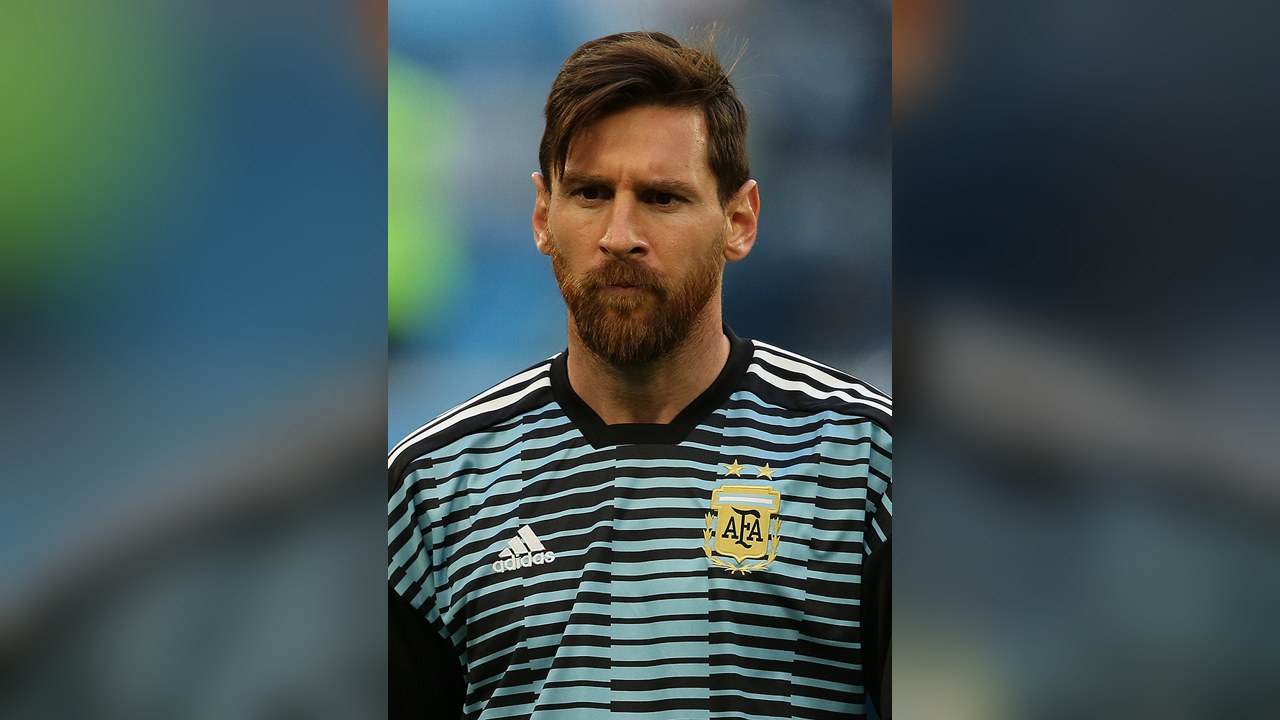
On the night before the 2026 World Cup final, Lionel Messi sat with a photo of every Argentina player, coach, and staffer and wrote something that sounded like a man preparing to let go.
“Whatever happens tomorrow, this group has already written a story that we will never forget and that nobody can erase,” the 39-year-old posted on Instagram. “LET’S GO ARGENTINA.”
The message landed hours before Sunday’s final in East Rutherford, New Jersey, where defending champions Argentina face European champions Spain at the New York New Jersey Stadium. More than 80,000 people are expected inside the venue; another 50,000 will watch from a screening in Central Park.
Messi’s post traced the arc of a generation that, for 16 years, won nothing with the national team — and then won nearly everything. Copa América titles in 2021 and 2024. The 2022 World Cup in Qatar. Now a second consecutive final, with a chance to make it back-to-back stars.
“The most beautiful thing about all these years was never just the titles, but the entire journey,” Messi wrote. “Sharing day-to-day life with this group, competing together, picking ourselves up in the difficult moments, and enjoying every step.” He thanked “each and every one of my team-mates, the coaching staff and everyone who works every day to ensure that this national team remains a family.”
The eight-time Ballon d’Or winner has reshaped his role during this tournament. Through the knockout rounds, Messi shifted from primary scorer to chief creator, setting up both goals in the semifinal win over England and driving the comeback against Egypt in the round of 16. Spain’s defensive structure — compact, pressing high, conceding exactly one goal in the entire tournament — is engineered to close the pockets of space where Messi operates. Luis de la Fuente’s side suffocated France in the semifinal so thoroughly that Kylian Mbappé, who broke the all-time World Cup scoring record during this tournament, barely registered.
The numbers favor Spain. Opta’s supercomputer ran 25,000 pre-match simulations and produced Spain as champions 59.6 percent of the time. Argentina defended their title in the remaining 40.4 percent. Within 90 minutes, Spain won 45 percent of simulations, a draw occurred in 29 percent, and Argentina took it in regulation 26 percent of the time.
Argentina’s path defies tidy modeling. They have scored more goals than any team in the tournament while conceding seven — a profile that reads like a team living on the edge. Two extra-time epics and a pair of late comebacks speak to resilience, not control. Spain’s profile is the inverse: one goal conceded, relentless possession, a counter-press that wins the ball back before opponents can breathe.
The final carries a generational subplot. Messi, 39, meets Lamine Yamal, 19, on the international stage for the first time — two players linked by a viral photograph of Messi bathing a baby Yamal for a charity calendar in 2007. Yamal has been growing into the tournament after a hamstring issue slowed his group-stage output; he won the penalty that unlocked France in the semifinal and has become Spain’s most dangerous outlet. A Spain victory would complete the symbolism. An Argentina victory would delay it indefinitely.
Key tactical duels shape the margins. Yamal against Argentina left-back Nicolás Tagliafico on Spain’s right flank. Aymeric Laporte and Pau Cubarsí trying to track Messi as he drops deep to escape markers. Mikel Oyarzabal, Spain’s five-goal top scorer, against the combative center-back pairing of Cristian Romero and Lisandro Martínez. In midfield, Rodri — the former Ballon d’Or winner anchoring Spain’s control — against Enzo Fernández and Alexis Mac Allister, whose physicality and forward thrust contrast with the technical precision of Rodri and Fabián Ruiz.
Slovenian referee Slavko Vinčić will officiate, the first Slovenian to take charge of a men’s World Cup final. Vinčić has overseen three matches this tournament, issuing seven yellow cards, one red, and no penalties. His appointment drew attention after several refereeing decisions involving Argentina sparked scrutiny during the competition, including a Messi challenge on an Algeria player that critics argued warranted a red card. FIFA’s head of refereeing, Pierluigi Collina, defended the officials: “Nobody can question the integrity of the FIFA World Cup match officials.”
This is only the second World Cup meeting between the two nations. The first came in the 1966 group stage, when Argentina edged Spain 2-1. Since 2000, Spain have won three of four meetings between the sides.
Smoke from Canadian wildfires blanketed the New York area during the week, triggering air-quality alerts and prompting city authorities to urge residents to reduce strenuous outdoor activity. A cold front expected over the weekend should dissipate the haze before kickoff.
Messi’s post did not say whether this would be his final World Cup appearance. It did not need to. The tone — gratitude, reflection, a story already written — carried the weight of someone who understands that whatever happens at the New York New Jersey Stadium, a chapter is closing.
Sources
- Yahoo Sports — Messi pays tribute to Argentina team in emotional pre-final post
- Al Jazeera — Spain vs Argentina: World Cup final predictions, schedule, Messi news
- Al Jazeera — Spain vs Argentina: Key factors that could decide World Cup 2026 final
- Yahoo Sports — Spain vs Argentina: World Cup final predictions, schedule, Messi news