

On the morning of the 2026 World Cup final, the Council of Europe’s secretary general published an open letter accusing FIFA of enabling match manipulation, bending to political pressure, and compromising the integrity of the tournament through its embrace of micro-betting.
Alain Berset, who leads the 46-nation intergovernmental human rights body, did not couch his language. “The next crisis has already begun,” he wrote. “It has two names: money and power.”
The letter, timed to land hours before Spain met Argentina at MetLife Stadium in East Rutherford, New Jersey, took direct aim at FIFA’s $150 million sponsorship deal with ADI Predictstreet, a prediction-market company incorporated just one week before the agreement was signed in April. Berset argued that the partnership had normalized wagering on individual player actions — “moments a single player can produce without changing the score” — creating conditions ripe for manipulation.
“Betting has moved from the result of a match to moments a single player can produce without changing the score,” Berset wrote. “A bet is won by making others lose. It is an open door to fraud. And this World Cup has opened the door wider.”
The intervention carries unusual diplomatic weight. FIFA and the Council of Europe signed a memorandum of understanding in 2018 to collaborate on human rights, integrity, and governance in sport — an agreement that remains in force. Public criticism from one partner against the other is, as the Guardian noted, vanishingly rare.
Berset also referenced FIFA’s decision to rescind a suspension on United States forward Folarin Balogun mid-tournament, a reversal that came after a phone call between FIFA president Gianni Infantino and U.S. president Donald Trump. The ban had been lifted in time for Balogun to appear in a quarterfinal against Belgium, which Belgium won 4-1. UEFA separately condemned the ruling as having “crossed a red line” in the sport’s rule of law. FIFA has not published its reasoning.
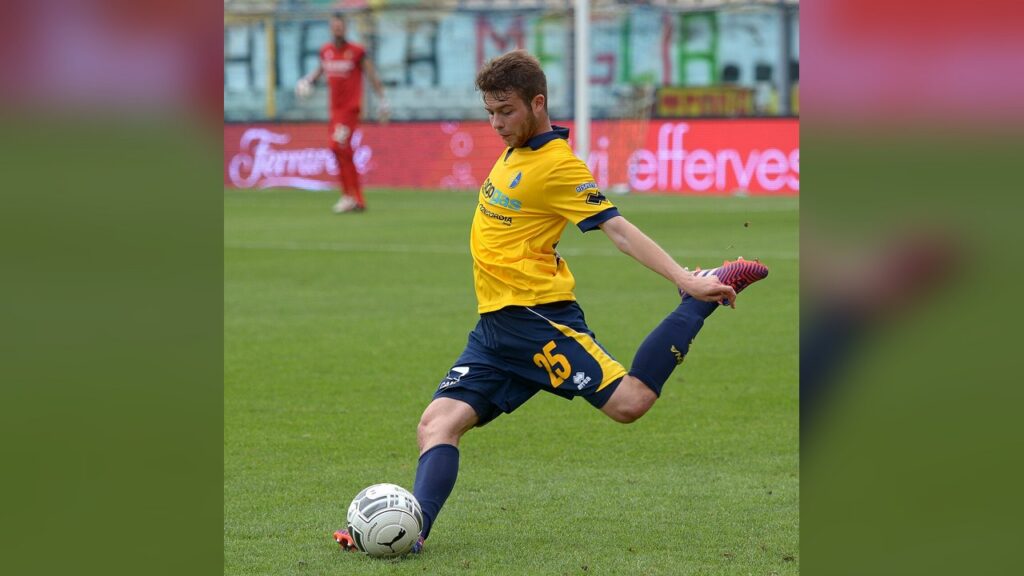
“When the rules bend under pressure, every result is open to doubt,” Berset wrote. “Political influence has also moved onto the field. The sanction suspended mid-tournament came after a head of state called the president of FIFA.”
Infantino has maintained that the disciplinary committee acted independently, “based on the applicable regulations and the specific facts.”
The letter catalogued a broader pattern of concern: referee authority questioned, racist abuse of players — some from elected officials — and the proliferation of wagering on “every pass, every card, every corner” across the first 48-team, 104-match World Cup. Berset referenced remarks by Paraguayan senator Celeste Amarilla about Kylian Mbappé and by former Spanish prime minister Mariano Rajoy about the France team as examples of political figures dragging the tournament into disrepute.
The Council of Europe’s intervention follows a letter signed by 72 members of the European Parliament ten days earlier, which asked the 27 EU-based football associations to investigate Infantino’s role in the Balogun case and alleged breaches of political neutrality and FIFA’s own code of ethics. In June, 50 MEPs separately wrote to Infantino and the FIFA Council requesting an investigation into the awarding of the FIFA peace prize to Trump.
Berset, a Swiss politician who has twice served as president of Switzerland, proposed what he called “a working dialogue that starts tonight” to build an integrity framework for the 2030 World Cup, which will be staged primarily in Spain and Portugal with co-hosting from Morocco and centenary matches in Argentina, Paraguay, and Uruguay. He invoked the Council of Europe’s history of sports-governance legislation, including a binding treaty on fan safety created three months after the Heysel Stadium disaster in 1985 and subsequent measures targeting doping and match-fixing.
Whether the pressure produces reform remains uncertain. UEFA does not appear likely to formally pursue the matter. And this past week, more than 200 of FIFA’s member associations formally backed Infantino’s bid for a fourth term in office, with an election scheduled for March.
FIFA was contacted for comment.
Sources:
- The Guardian — FIFA gives fraud ‘an open door’ with betting, says Council of Europe chief
- Yahoo Sports — Council of Europe questions integrity of World Cup in scathing letter to FIFA hours before final
- Yahoo Sports — Why the 2026 World Cup final has a halftime show in controversial first for FIFA