
FAYETTEVILLE, Ga. — The 2026 World Cup is over for the United States, and the scoreboard says what it says: a 4-1 round-of-16 loss to Belgium. But 50 million people watched that match, the largest audience for any soccer broadcast in American history, and U.S. Soccer CEO J.T. Batson is working the room like a man who knows the numbers matter more than the result.
“Out there is the leadership team of one of the largest companies in the world and what did their CEO do when he saw me earlier today?” Batson said Thursday from the federation’s newly opened national training center in the Atlanta suburbs. “He goes, ‘What can we do to help?'”
That energy — corporate titans volunteering, phones buzzing with calls from notable figures — is what Batson and COO Dan Helfrich are trying to harness before it cools. The federation laid out the framework of a long-term plan Thursday, one built around three pillars: the momentum from this summer’s home-soil World Cup, the 2028 Los Angeles Olympics, and the 2031 Women’s World Cup.
Batson compared the moment to the 1995–1999 stretch that ushered in a previous era of American soccer. “We feel like we’re one month in to the next five-year period,” he said.
The to-do list is long. The federation has extended a new contract offer to USMNT head coach Mauricio Pochettino, with Batson calling the parties in “active discussions” but offering no timeline. The sporting director role remains vacant since Matt Crocker’s departure in April; Helfrich holds the final say in the interim, supported by assistant sporting director Oguchi Onyewu, Barry Pauwels, and women’s national team head coach Emma Hayes.
One vacancy is settled. Steve Cherundolo, the former national team defender and ex-LAFC head coach, will lead the U.S. men’s Olympic team at the 2028 Los Angeles Games. Pochettino played a key role in that hire. The Olympics — a U-23 tournament on the men’s side — have been an afterthought for U.S. Soccer for over a decade after the Americans failed to qualify in 2012, 2016, and 2020. Helfrich made the priority plain: “We view the men’s Olympics in ’28 as a major tournament and we will put all the resources of the federation to work.”
Former Arsenal manager Arsène Wenger, now FIFA’s chief of global football development, has collaborated with U.S. Soccer for several years on the premise that a nation with unlimited resources could break into the elite tier on the men’s side while keeping the women’s program at the top.
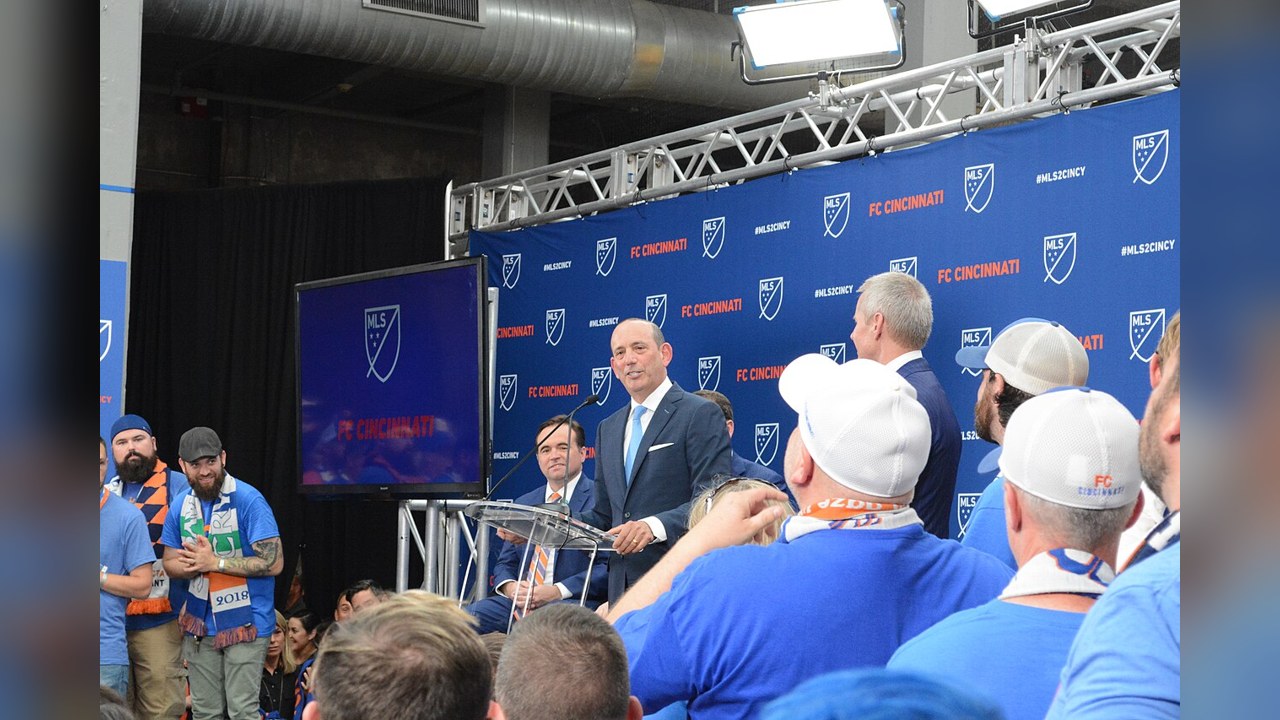
Separately, MLS Commissioner Don Garber declared the World Cup settled any lingering debate about soccer’s American viability. “We proved that we are a soccer nation over the last month,” Garber told Front Office Sports. “We proved that we can build the most valuable commercial market in the world.”
Garber, who has run MLS for nearly three decades, confirmed his contract runs through 2027 and that a formal succession process is already underway. Candidates to replace him include LAFC co-owner Larry Berg, 49ers Enterprises president Paraag Marathe, and former Fox executive David Nathanson. MLS is also shifting to a fall-to-spring schedule next year to align with the international calendar.
“I have done the job I set out to do,” Garber said. “I wanted to capture the new America and build a nation that loves the sport. And we’ve proved that.”
Whether the federation converts this summer’s attention into sustained success — or lets it scatter like a blown coverage — will depend on hires still unmade and a plan still being filled in. The audience showed up. The film doesn’t lie about that.
Sources:
- CBS Sports — U.S. Soccer maps out long-term vision after USMNT’s roller coaster World Cup run
- Yahoo Sports / Front Office Sports — MLS Commish: World Cup ‘Proved We Are a Soccer Nation’