
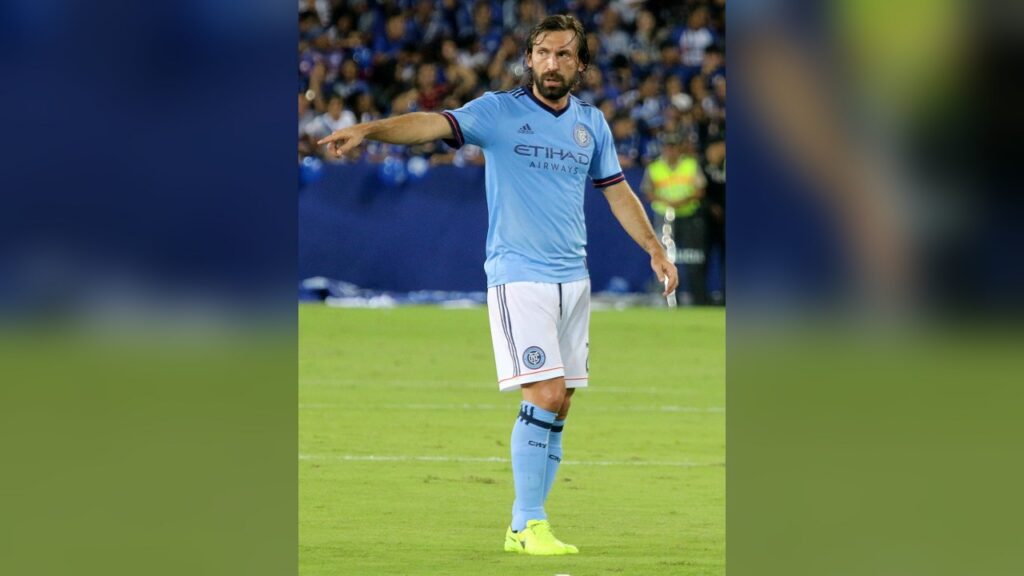
Andrea Pirlo will not become the next head coach of Italy’s national team, ending days of controversy over his commercial ties to a Russian betting company that drew political opposition from across the Italian spectrum.
Pirlo, 47, confirmed his withdrawal in an Instagram post on Monday morning, writing that he had “learned last night” he was no longer a candidate and expressing “great bitterness” at how a sporting decision had been pulled into a political firestorm.
His appointment had not been formally announced by the Italian Football Federation (FIGC), but Italian media treated it as imminent. New FIGC technical director Paolo Maldini and his advisor, former Milan teammate Leonardo, had championed Pirlo as their preferred successor to Gennaro Gattuso, who stepped down in April after Italy’s penalty-shootout loss to Bosnia-Herzegovina — a defeat that sealed a third consecutive missed World Cup.
The candidacy unraveled over the weekend when several Italian politicians seized on Pirlo’s role as global ambassador for Fonbet, a Russian bookmaker he signed with last October. The scrutiny centered on a Fonbet promotional event at Moscow’s Luzhniki Stadium, where Pirlo and former teammate Marco Materazzi signed autographs alongside pro-Kremlin pop star Shaman. The event coincided with a large Russian aerial assault on Ukraine.
Carlo Calenda, leader of the centrist Azione party, was blunt: “Anyone who is or has been promoting Russia after 2022 should not hold national office.” Pina Picierno, a vice-president of the European Parliament, said Italian football “desperately needed a cultural, ethical and managerial revolution” and that choosing Pirlo “goes in the exact opposite direction.” Senate president Ignazio La Russa, a member of Prime Minister Giorgia Meloni’s party, called the potential hire “a leap in the dark.”
Pirlo pushed back hard. “The professional collaboration that is the subject of recent controversy came about as part of my working experience in the United Arab Emirates and is exclusively of a commercial and sporting nature,” he wrote. “To attribute a political meaning to this collaboration means attributing convictions to me that I have never expressed and that I do not hold.”
The Russian ambassador in Rome, Aleksey Paramonov, offered a counterweight, calling it “saddening” that Pirlo was being “ostracized” in his own country.
The numbers on Pirlo’s coaching résumé made the political fight an odd hill to defend. Since turning to management in 2020, he has managed Juventus, Sampdoria, Turkish side Karagümrük, and now Dubai-based United FC. His trophy haul: one Italian Cup. At Juventus, where he won four Serie A titles as a player, he was dismissed after a single fourth-place season. Maldini and Leonardo preferred him to Antonio Conte — who has won Serie A with three different clubs and a Premier League title with Chelsea — a choice that, coaching CVs considered, was always the harder sell.
That preference may now cost Maldini his position. Italian media report he is considering resigning just 16 days into the technical director role he accepted on July 11. Federation president Giovanni Malago, who took office amid the post-World Cup restructuring, was said to have opposed Pirlo’s appointment from the start.
Italy’s coaching search restarts with the clock ticking. A Nations League group featuring France, Belgium, and Turkey looms in the autumn, followed by Euro 2028 qualifying. Conte and Roberto Mancini — who guided Italy to the Euro 2020 title before quitting for Saudi Arabia — are the names circulating in la Gazzetta dello Sport. Guardiola and Carlo Ancelotti were both approached earlier this month. Both declined.
Pirlo closed his statement with a line that will outlast the news cycle: “My love for Italy does not depend on a role. It is part of my story, my identity, and will continue to accompany me, always.”
Sources: