
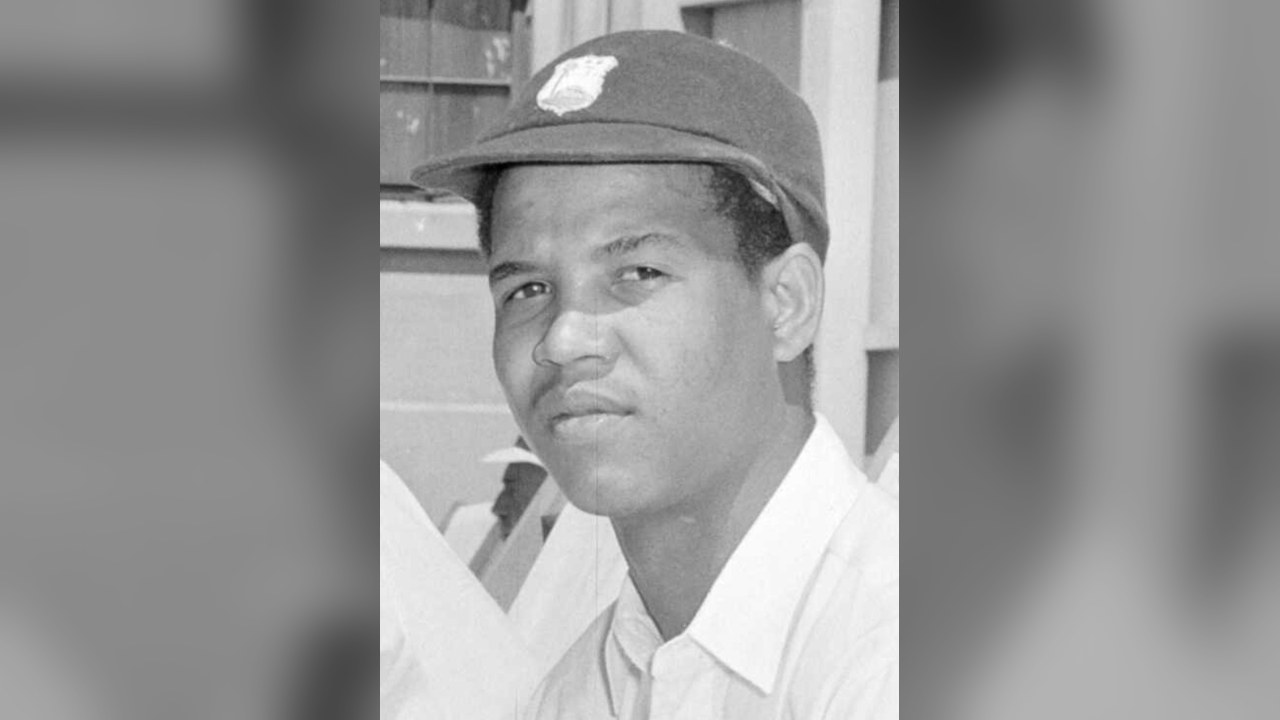
Sir Garfield Sobers — the West Indies all-rounder widely regarded as the finest cricketer who ever lived — died Friday at his home in Bridgetown, Barbados. He was 89.
The news, first reported by the Associated Press, drew tributes from every corner of the cricketing world, from ICC chairman Jay Shah to Barbados Prime Minister Mia Amor Mottley, each trying to measure a career that defied measurement.
Sobers played just two first-class matches before debuting for the West Indies in 1954 at age 17. He stayed for 20 years, captaining the side for seven of them. He could bat. He could bowl — left-arm fast, left-arm spin, whatever the situation demanded. He could field anywhere on the ground. In a sport built on specialization, Sobers refused to pick a lane.
India great Sunil Gavaskar, himself one of the finest batters in the game’s history, called it “probably the saddest day for the game of cricket” in a social media post. “The greatest cricketer to walk the earth has left us,” Gavaskar wrote. “No words can ever do justice to Sir Garfield Sobers the cricketer. He was everything we dream of becoming when we pick up the bat or the ball as kids.”
England’s Geoffrey Boycott, no stranger to run-scoring himself, remembered Sobers’ presence at the crease in language that any athlete in any sport would recognize. “He was like a panther with a purposeful, loping and confident walk,” Boycott told the Telegraph. “He didn’t say anything. He did not need to. There was no ego. His walk let the opposition know he was there for business.”
ICC chairman Jay Shah wrote on X that Sobers “helped shape the identity of West Indies cricket during one of its most celebrated eras and leaves behind an indelible mark on the history of our game.” Pakistan batter Babar Azam called him a player who “didn’t just play the game — he showed us what was possible in it.” Former West Indies fast bowler Ian Bishop described a man “always generous with his time and advice,” one who “elevated Barbados and the West Indian Islands to a place of great and unprecedented standing in the world.”
Three current Barbadian West Indies captains — Roston Chase, Hayley Matthews, and Shai Hope — issued a joint statement framing Sobers as proof that a small island could produce the very best. “Sir Garry’s journey from Barbados to becoming the greatest cricketer the world has ever seen remains one of the most inspiring stories in the history of our game,” they wrote.
Cricket West Indies president Dr. Kishore Shallow placed Sobers in a context that reached past the boundary rope — a Caribbean region, in his telling, that was finding its voice on the world stage when Sobers gave it something to say. “He showed that greatness was not confined by the size of our nations, the geography of our islands or the circumstances of our beginnings,” Shallow said.
Prime Minister Mottley’s tribute carried the weight of a nation mourning its favorite son. “From Bay Land to Kensington and onto the world stage, he carried Barbados and the West Indies with distinction,” she wrote on X. “He made us all stand a little taller as Barbadians.”
She closed with two words that cricketers use the way ballplayers use “tip your cap” — a farewell that doubles as a final scorecard. “Well played, Sir Garry. Well played.”
Sources: