
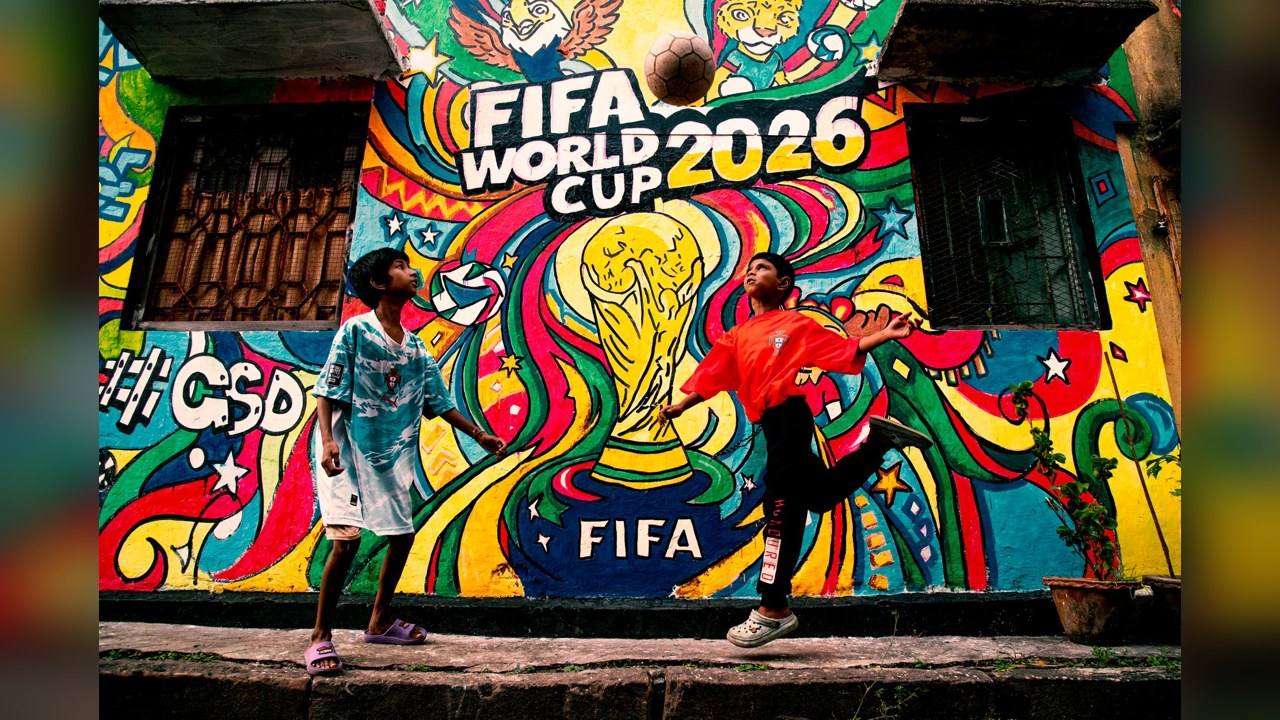
FIFA approved a $655 million prize pool for the 2026 World Cup back in December, a 50% jump from the $440 million they spread around in Qatar four years ago. Add in $1.5 million handed to each of the 48 participating federations for preparation costs, and the grand total distribution reaches $727 million — the fattest check FIFA has ever written, according to the organization’s own website.
The team lifting the trophy on July 19 takes home $50 million. That’s up from the $42 million Argentina collected when Lionel Messi dragged them across the finish line in 2022. Fifty million dollars to one federation. Back when I played, you got a handshake, a cold Gatorade, and maybe a steak dinner if the coach wasn’t feeling cheap.
The money flows downhill from there. Second place earns $33 million. Third gets $29 million, fourth $27 million. Teams finishing fifth through eighth — the quarterfinal losers — collect $19 million apiece. Ninth through 16th take $15 million each. Seventeenth through 32nd get $11 million. And the 16 teams that pack their bags after the group stage, the ones who flew across an ocean just to go home early, still walk away with $9 million.
Every single one of the 48 teams gets paid. That’s the part that would’ve made my old defensive coordinator’s head explode. You show up, you lose three games, you go home, and you still get nine million bucks. In my day we called that a participation trophy. Now they call it Tuesday.
The 2026 tournament, co-hosted by the United States, Canada, and Mexico, is the first World Cup with 48 teams in the field — expanded from the 32-team format used since 1998. More teams, more games, more money. FIFA’s betting that a bigger tent means a bigger pie, and they’re slicing it up so nobody leaves the table hungry.

The prize money goes directly to each country’s national football federation, not to the players. How those federations distribute the cash to their squads varies. Some federations split it with players; others funnel it into youth development, infrastructure, or — let’s be honest — whatever the people in suits decide matters most. The players get what their federation negotiates, which in some cases is a lot and in others is a pat on the back and a new tracksuit.
The Yahoo Sports article, syndicated from People, notes that the FIFA Council signed off on these figures in December 2025, locking in the structure well before the first ball is kicked. The final is scheduled for July 19, 2026.
For context, the 2022 World Cup in Qatar distributed $440 million in prize money. The 2018 tournament in Russia paid out $400 million. The 2014 edition in Brazil managed just $358 million. So in twelve years, FIFA has nearly doubled the pot. Whether the quality of the soccer has doubled is a question for someone who gets paid to have opinions, not a guy who used to get paid to hit people.

What’s clear is that the 2026 World Cup will be the most lucrative tournament in FIFA’s history. The organization is spending more, hosting more, and inviting more teams than ever before. Whether that produces better football or just a bigger spectacle with a bigger price tag — well, that’s why they play the games.