
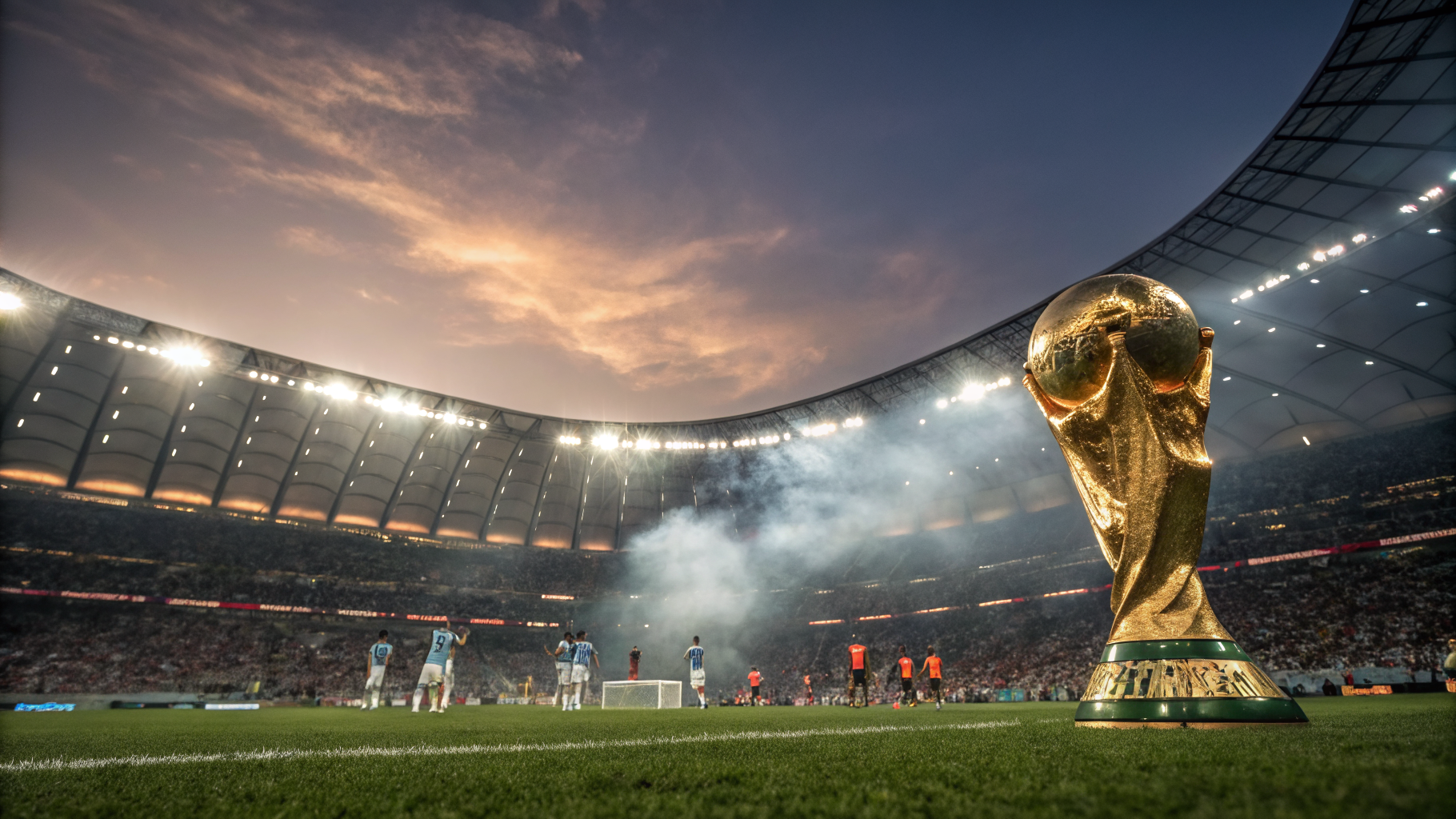
Ferran Torres needed 104 matches, 16 cities, three countries, and roughly 117 minutes of a final that had no business being that tense before he finally put the ball where it needed to go. Spain 1, Argentina 0. Second World Cup title for La Roja, first since 2010, and a tournament-record seventh clean sheet in eight games. The defending champions didn’t so much lose as slowly stop breathing — Lionel Messi and Argentina failed to register a single shot until the 117th minute, which is like a heavyweight going twelve rounds without throwing a jab.
The final at MetLife Stadium in New Jersey was the right outcome wrapped in the wrong packaging. Spain, the one true team in a tournament built around stars, beat Argentina, a side one Yahoo Sports columnist described as “dysfunctional and too dependent on the greatest star of all.” Messi had carried them back from deficit after deficit throughout the knockout rounds. In the final, there was nothing left to give.
Four hours after the whistle, Spanish players finally emerged from the MetLife dressing room. Nico Williams kept repeating it to teammates: “champions of the world, champions of the world.” Lamine Yamal, mid-dance, pointed to the second star on the crest. Some Spanish players mocked Donald Trump’s dancing in the celebration, a reminder of how much else had intruded on this World Cup.
And intrude it did. This was the first 48-team World Cup, co-hosted by the United States, Canada, and Mexico, and FIFA projected a record $15 billion in revenue. The expansion produced genuine highlights — Cape Verde and DR Congo delivered some of the tournament’s best stories, and the quality of play held up better than critics predicted. But the scale made the thing unwieldy. One Yahoo assessment called the tournament “mostly very entertaining but entirely forgettable, good but, by the end, far from great.” Like the best American fast food, they wrote — tasty, filling, and empty calories.
The controversies piled up like laundry. Ticket prices climbed to a reported $1 million for premium final seats. Somali referee Omar Artan was denied entry to the United States, putting FIFA president Gianni Infantino on the back foot from the tournament’s opening days. The US carried out airstrikes on Iran during the competition, with the Iranian national team’s treatment cited as one of the more shameful subplots.
Then there was the Folarin Balogun case. The USMNT forward received a red card that FIFA subsequently “suspended” — overturning the suspension in a move widely interpreted as political interference, with reported involvement from Trump. The USMNT lost 4-1 to Belgium immediately afterward, which one CBS Sports newsletter framed as probably for the best, since the precedent of a bureaucratic autocracy arbitrarily invoking and revoking its own rules doesn’t sit well. The specifics of how many FIFA officials were involved, and how much Trump influenced the process, remained less important than the fact that it happened at all.
The final itself was buried under spectacle. Tom Cruise gave a speech before kickoff. Justin Bieber performed a halftime show that one columnist called an “abomination,” with FIFA breaking its own rules to stretch the break beyond 27 minutes. Trump and Infantino walked on the pitch afterward. Infantino was booed.
On the pitch, the semifinals delivered more drama than the final. England, five regulation minutes from the final, surrendered an equalizer and a dagger to Argentina in a collapse that will haunt the Three Lions for years. France, the overwhelming tournament favorite, simply forgot how to score against Spain in the other semi. Kylian Mbappé became the World Cup’s all-time leading scorer and won the Golden Boot, but the bronze-medal match — England 6, France 4 — was the day’s real showpiece.

Spain’s team landed in Madrid to celebrations through the city streets, with captain Rodri, head coach Luis de la Fuente, and RFEF president Rafael Louzán displaying the trophy. Concerts featuring Aitana, Lola Indigo, and Arde Bogotá were planned for the city center.
FIFA is already rumored to be considering expanding to 64 teams for 2030. The precedent, as one writer put it, has been set. The legitimacy eroded. The revenues will see off any prospective challenger to Infantino’s presidency. The game goes on, a little less itself than before.
Sources
- Yahoo Sports — 2026 was a World Cup of contradictions – with a tainted legacy
- Yahoo Sports — Messi, magic and mayhem: The lasting legacy of the 2026 World Cup
- CBS Sports — Spain win World Cup as Lionel Messi falls short
- Yahoo Sports — The World Cup and Spain’s national team are already in Spain!