
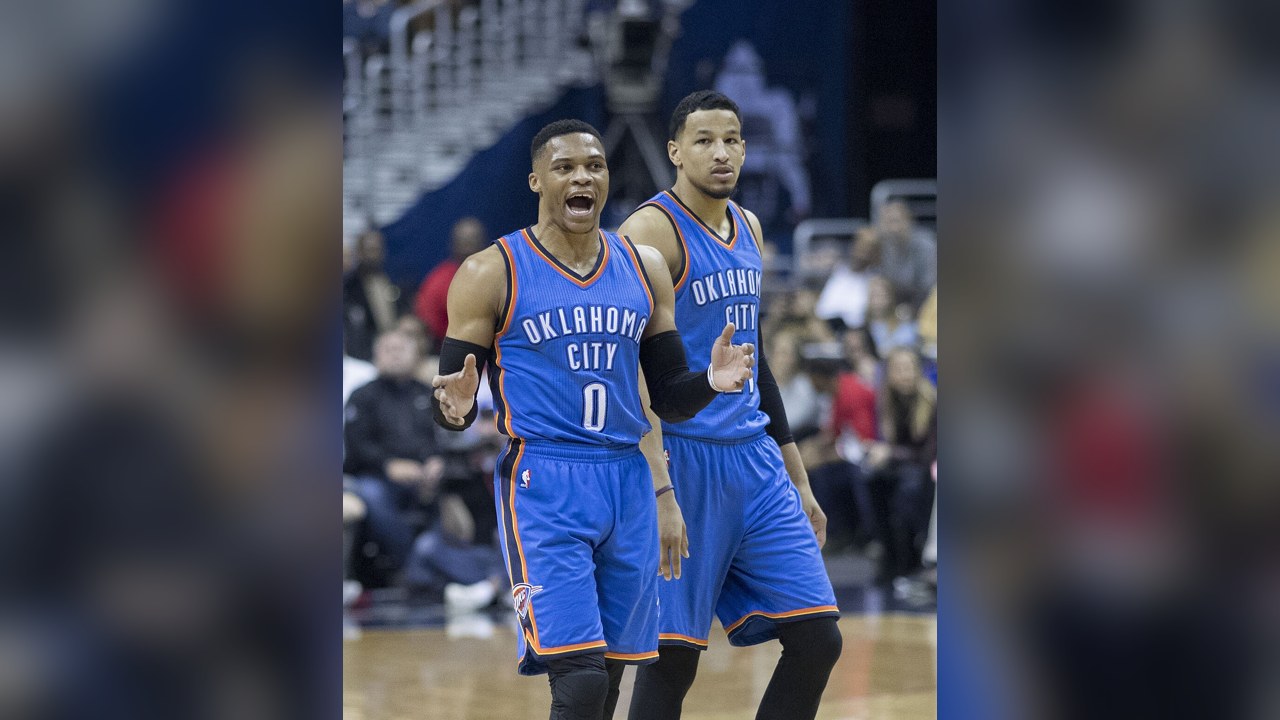
Every now and then a highlight surfaces on r/nba that stops you mid-scroll, and the clip of Russell Westbrook’s 57-point triple-double against the Orlando Magic is one of them. March 29, 2017. Oklahoma City Thunder on the road. Westbrook finishes with 57 points, 13 rebounds, and 11 assists — and buries a three-pointer to tie the game and force overtime, where the Thunder pulled away for a 114-106 win.
That shot to send it to overtime is the kind of moment that separates a stat line from a story. Down the floor, clock bleeding out, and Westbrook pulls up from deep like he’s got a rancher’s confidence in a dry July — no hesitation. The film doesn’t lie: he wanted that moment, and he took it.
At the time, 57 points was the highest-scoring triple-double in NBA history. Wilt Chamberlain’s 50-point triple-double from 1968 had stood for nearly half a century. Westbrook didn’t just break it; he shattered it by seven points, on the road, in a game his team needed to keep pace in the Western Conference playoff race. It was the 38th triple-double of his historic 2016-17 season — the year he averaged a triple-double and won MVP, a feat most folks thought was impossible in the modern era.
Then the record started moving like a loose calf through a gate.
Less than a year later, on January 30, 2018, James Harden posted 60 points, 10 rebounds, and 11 assists for the Houston Rockets — also against the Orlando Magic, of all teams. Houston won 114-107. Harden’s line nudged Westbrook’s mark by three points, and the basketball world barely had time to settle on a new record holder before another one came along.
On January 7, 2025, Nikola Jokic went for 61 points to go with his triple-double in a game against the Minnesota Timberwolves. The Denver Nuggets center — a guy who moves like he’s coaching from the paint, all elbows and vision — pushed the bar higher still. Three players, three record-breaking nights, all within an eight-year window.
What’s striking isn’t just the scoring. It’s that each of these performances came in a different era of NBA basketball. Westbrook’s was raw athleticism and sheer will — a one-man fast break in a Thunder jersey. Harden’s was step-back threes and foul-drawing craft, the system player turned system-breaker. Jokic’s was footwork and feel, a center doing things from the post and the perimeter that nobody his size is supposed to do.
The Orlando Magic ended up on the wrong side of two of these three record nights, which is the kind of bad luck you can’t coach around. You can draw up the defense, rotate properly, contest the shot — and sometimes a man just decides he’s going to get 60 on you. There’s no scheme for that.
The r/nba thread that resurfaced the Westbrook clip this week drew the connection between all three performances, and the progression tells you something about where the league has gone. The highest-scoring triple-double went from 50 to 57 to 60 to 61 in less than 60 years — and the last 11 points of that jump happened in eight seasons. Pace is up, space is up, and players are doing things with the ball that would’ve gotten you benched in my day. But 61 points while also grabbing double-digit rebounds and dropping double-digit assists? That’s not a system. That’s a player.
Westbrook’s 57 still holds up on the highlight reel, even if the record didn’t. The game-tying three, the overtime takeover, the box score that looked like a misprint — it’s all there on film. And the film doesn’t lie.